
THE END OF THE WORLD — AGAIN: Why the Apocalypse Meme Replicates in Media, Science, and Culture
by Barry Vacker
Publication Date: December 21, 2012
SUMMARY
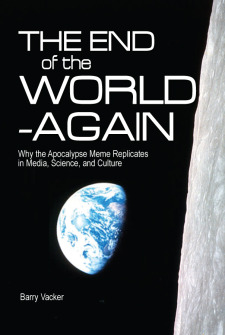 Click on cover to buy from Amazon.Doomsday scenarios. Terrifying tomorrows. Visions of the end of the world. These "futures" proliferate in our culture, from economics to ecology, theology to technology, biology to cosmology, James Bond to Slavoj Žižek, Plato’s Atlantis to Lars von Trier's Melancholia. With creativity and critical insight, Barry Vacker shows why apocalyptic memes replicate and have built-in survival advantages. This book explains how the doomsdays reveal the deeper challenges facing human existence — the philosophical apocalypse effected by our lack of cosmic meaning in the vast universe. Have we truly embraced our true existence on Spaceship Earth floating in the cosmos of the new millennium? Our calendars say we have passed the year 2000, but have we really entered the new millennium? The End of the World — Again offers an original, exciting, and, for some, terrifying critique of culture in 2012 and beyond. 171 pages.
A Note on the Publication date: December 21, 2012. This is the book to read after the Mayan hysteria has passed. You know there will be more apocalypses to come, real and imagined. The question is: why?
________________________________________________________________________
To read the 5-star reviews in Amazon, click here: Reviews.
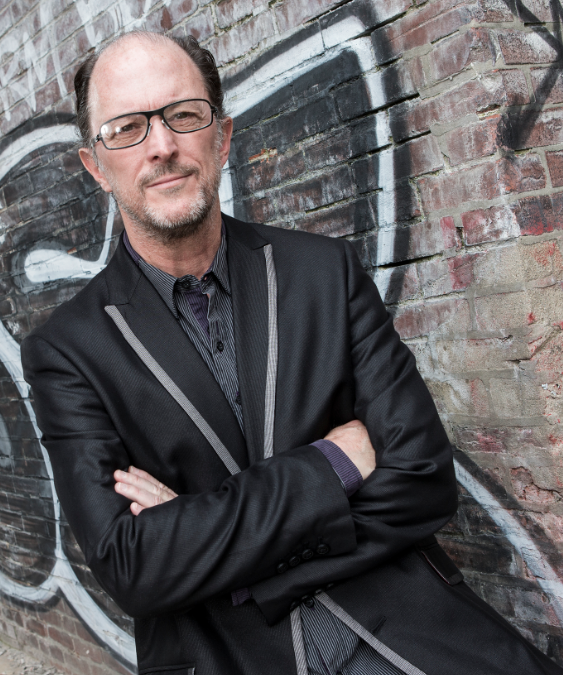 Barry Vacker, 2013.To read a short interview with Barry at the Temple School of Media and Communication website, click here: Interview.
To read a feature story in Temple magazine (Summer 2013) that discusses Barry's book and his "End of the World" class, click here: Feature Interview.
To purchase the book from the Center, click on the "Buy Now" button below. You will be directed to PayPal, where you can make a safe online purchase with your credit card or PayPal account.
Note: All profits from the sales of this book go to the Center for Media and Destiny. We appreciate your support of independent thinking!
________________________________________________________________________
WHY WRITE ABOUT APOCALYPSES?
Here's why: The Center is interested in the "big future" questions for humanity. Doomsday scenarios are proliferating in the media, movies, sciences, and ideologies of the 21st century, producing a global culture saturated with apocalyptic destinies for our society, our species, and our planet.
The challenge is to understand what these "end of the world" scenarios (plausible or not) say about our culture, our worldviews, and our future as a species?
Humankind is more than a decade into the new century, in a new millennium that was supposed to provide utopian, enlightened, or optimistic possibilities for civilization. Instead, apocalyptic destinies are proliferating throughout the media and global culture — apocalypses for humanity, the economy, the environment, the planet, and even the cosmos. Why? What does it mean?
It is crucial to understand these questions and destinies, as presented in recent films like Gravity and The Hunger Games (among many in 2013-2014). What are these destinies saying about the future of human civilization and our ability to exist, flourish as a species, save our planet's ecosystem, and find meaning in a vast universe — a cosmos of which we are not the center and for which there is no creator.
Barry's book and the Center have embraced these challenges and our critiques of apocalyptic culture have generated much media buzz.
________________________________________________________________________
We welcome your feedback. If you have comments about this book, please contact us at the link provided. Thanks. Contact